Funding Partner: Oxfam Hong Kong
Technical Partner: Oxfam in Nepal
Project Name: Building Community Resilience to Climate Risks & Vulnerabilities (BCRC) Project
Project Objective: The main objective of the project is to strengthen and enhance climate resilience in communities by promoting livelihood diversification, community-led adaptation planning and inclusive governance.

Brief Summary of Project:
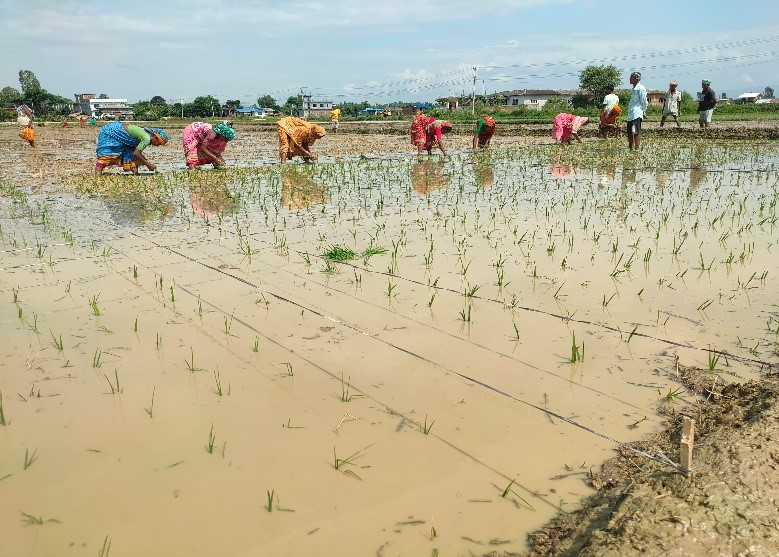
BCRC project significantly strengthened climate resilience in agriculture through the promotion of Climate-Smart Agriculture (CSA) approaches and farmer-centered capacity building. Through the Climate Field School methodology, 100 farmers in Chandrapur and Gujara municipalities were equipped with practical knowledge on climate-adaptive farming practices, enabling informed decision-making based on local climate and field conditions. Good Agricultural Practices (GAP) were further promoted through CSA demonstration plots, benefiting more than 130 farmers in Rautahat district. Innovative practices such as Integrated Rice-Duck Farming reached over 150 farmers, increasing awareness and adoption of environmentally sustainable and climate-resilient production systems. In addition, scientific assessment of local paddy varieties led to the identification and promotion of suitable climate-resilient varieties, while targeted CSA trainings strengthened the capacity of 100 farmers to apply adaptive technologies. Soil health management was enhanced through detailed analysis of 15 soil parameters for 95 farmers, enabling evidence-based input use, improved productivity, and sustainable land management.
Community-led adaptation and nature-based solutions (NbS) were central to building local climate and disaster resilience. The project supported the formulation of four Community Climate Change Adaptation and Disaster Management Plans (CDMPs) in Chandrapur and Gujara municipalities through inclusive and participatory processes, ensuring that community priorities and local knowledge were reflected in resilience planning. Environmental restoration efforts revitalized approximately 20 hectares of barren and degraded land through the plantation of more than 31,000 forest-based seedlings, contributing to increased green cover, ecosystem restoration, and long-term climate mitigation. In addition, nature-based flood protection measures were implemented through the construction of over 400 meters of river bio-embankment, directly safeguarding more than 200 households from flood risks while demonstrating cost-effective and environmentally friendly disaster risk reduction practices.

Good governance and inclusive leadership were strengthened by enhancing institutional capacity and community advocacy on climate and social issues. More than 500 women were empowered through sustained engagement at the Women Empowerment Centre (WEC), enabling them to advocate on Gender Equality and Social Inclusion (GESI), climate change adaptation, leadership, and broader community concerns, and increasing their participation in local decision-making processes. At the municipal level, Chandrapur municipality was supported in the development of its Climate Change Policy and Disaster Fund Mobilization Guideline, providing clear frameworks for planning, financing, and coordinating climate and disaster response actions. These governance initiatives strengthened accountability, improved coordination among stakeholders, and enhanced the municipality’s capacity to respond effectively to climate impacts and disaster risks.
Ø → Enhanced Climate-Adaptive Knowledge: Successfully equipped 100 farmers in Chandrapur and Gujara municipalities with practical knowledge on climate-adaptive agricultural practices through the Climate Field School approach, enabling them to make informed farming decisions.
Ø → Promotion of Good Agricultural Practices (GAP): Over 130 farmers in Rautahat district improved their understanding of Good Agricultural Practices (GAP) through hands-on Climate Smart Agriculture (CSA) demonstration plots, helping them adopt more resilient and productive farming methods.
Ø →Scientific Assessment of Local Crop Varieties: Conducted scientific study and field evaluation of local paddy varieties, leading to the identification and promotion of suitable climate-resilient varieties for cultivation in the following year.
Ø →Strengthened Farmer Capacity on CSA: Provided capacity-building training to 100 farmers on Climate Smart Agriculture, supporting them in establishing adaptive agricultural practices in their own fields.
Ø →Soil Health Testing and CSA Adoption: Analyzed 15 soil parameters for 95 farmers in Chandrapur and Gujara municipalities, enabling farmers to understand soil health conditions and adopt appropriate CSA technologies for improved productivity.
Ø →Restoration of Degraded Land: Revitalized approximately 20 hectares of barren and degraded land in Chandrapur and Gujara municipalities by planting over 31,000 forest-based seedlings, contributing to ecosystem restoration and increased green cover.
Ø →Women’s Leadership and Advocacy: Empowered more than 500 women to advocate on community-level issues related to GESI, climate change adaptation, leadership, and social concerns through sustained dialogue and engagement via the Women Empowerment Centre (WEC).
Ø →Local Adaptation and Disaster Management Planning: Facilitated the formulation of four Community Climate Change Adaptation and Disaster Management Plans (CDMPs) in Chandrapur and Gujara municipalities, providing communities with strategic guidance to implement need-based climate and disaster resilience actions.
Ø →Flood Protection through Nature-Based Solutions: Directly safeguarded over 50 households from flood risks by constructing a 145-meter river bio-embankment, showcasing an effective nature-based solution for community protection.