Namaskar!
My name is Ramdulari Chaudhary, and I live in Gujara Municipality Ward-4 with my husband, two sons and a daughter. We are a simple middle-class farming family. Our life depends on agriculture as we grow paddy, maize, potatoes and a few vegetables for our own consumption. Like most farmers here, we work very hard, but still, the return is sometimes not as expected.
I never imagined that one day, people from outside my village would come to observe my farm. But this year, something completely new happened when I was selected for the rice-duck farming demonstration under the BCRC project of RDC Nepal supported by Oxfam in Nepal. Our ward chairperson recommended our name for this activity. Soon after, Sochindra Ray Yadav sir, the JTA from RDC Nepal, came to our home. He asked about our farming habits, our experience, our land and even our interest. He told us that this method, paddy cultivation combined with duck rearing is a climate-smart practice where ducks help the rice grow better and duck also grow itself.
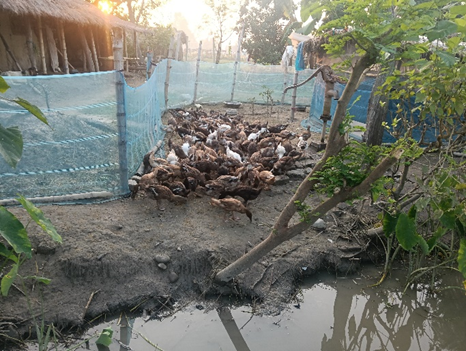
Being a Tharu family, we were already familiar with duck rearing, but combining it with paddy farming was totally new for us. We were unsure in the beginning, but Sochindra sir explained everything very patiently regarding the process, the benefits, and the support we would receive. Slowly we gained confidence and agreed to try the demonstration in 5 kathha of our field.
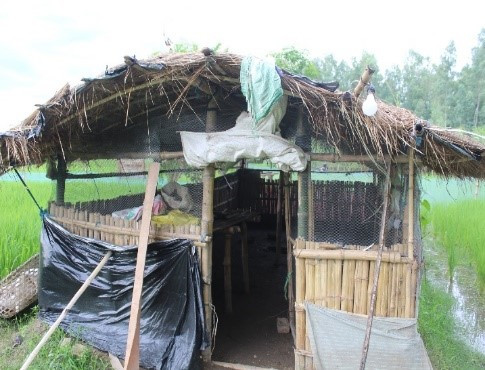
Soon after, we received the necessary support under BCRC project. The BCRC project provided us with everything required to start this new method. We got 7 kg Chandan Katarni paddy seed, two tractor-tailors of manure, 50 kg mustard cake, 125 ducklings (10 days old), bamboo for shed construction, net fencing around the whole 5-kathha plot and 140 kg duck feed and feeders. Altogether, the project supported us with materials worth Rs. 63,800, while our family invested around Rs. 30,300 for shed construction and extra materials.
To my surprise, although 7 kg of seed was supported, we used only 3.75 kg for the entire 5 kathha, just 750 grams per kathha, unlike our traditional practice of nearly 2 kg per kathha. This itself was a big learning.
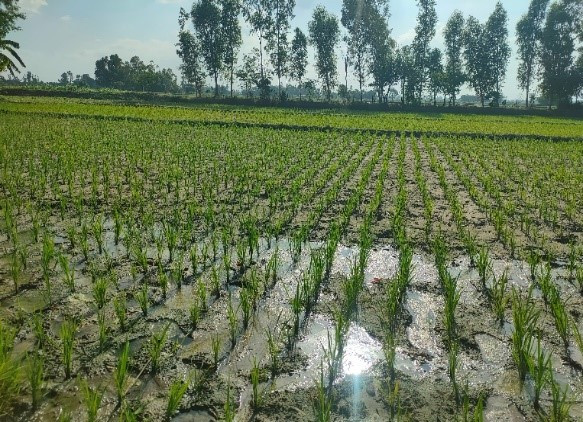
“At first the field looked weak, and I was worried.” After planting the paddy using the SRI method, the field looked quite empty and weak. No chemical fertilizers were used, and because the spacing was wide (40 cm row-to-row and 30 cm plant-to-plant), we felt insecure about the final harvest.
Two days after getting 10 days older, we released 125 ducks into the field. Something magical happened after that. Within a week, the paddy started turning greener. The plants became stronger, healthier and more vigorous. It was as if the field got new life. I had no idea ducks could be such good helpers. They ate weeds and pests. They cleaned small weeds and insects, including eggs and larvae. I realized we did not need pesticides. Their movement shook the plants gently, helping the roots breathe. Duck droppings enriched the soil with nutrients like potassium. This made our field look completely different from others in the village. JTA sir told us that some plants had up to 32 tillers, which I had never seen in my life.
Seeing our paddy greener and healthier, people came to visit themselves. More than 40 farmers from nearby visited our demonstration plot. Some came out of curiosity, some with doubt, and some with great interest. Many told me-“Hami pani aaune saal ma rice-duck try garne chhau.” Their words made me feel proud.
But during farming, not everything was easy. 25 ducklings died early due to adaptation problems. Managing the ducks twice a day (9–10 AM and 4–6 PM) required time and discipline. Later on, ducks were eating so much and we had to buy feeders frequently. Just before harvesting, we had to stop sending ducks to the field 20 days earlier so they wouldn't eat the ripening grains. But despite these challenges, the final outcome made all our efforts worthwhile.
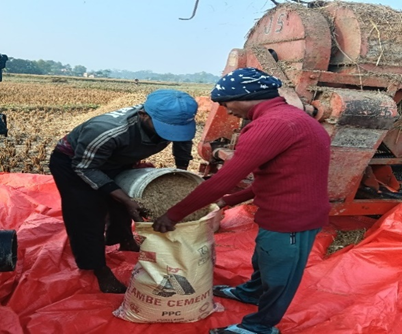
At harvesting time, the result surprised us again. We got 120 kg of paddy per kaththa. Total producing 600 kg in 5 kaththa which was promising yield without using chemical fertilizer and pesticides. We also sold 30 ducks at Rs. 500 each, earning Rs. 15,000, and we still have 70 ducks at home. I plan to keep some for the next season, as they will lay eggs and give ducklings for future rice-duck farming.
Actually, this climate adaptive practice gave me confidence I did not have before. More than the paddy and ducks, this demonstration improved something else-my confidence. I now understand that new techniques can bring real improvement in farming. This method used no chemical fertilizers, reduced seed requirement, controlled pests, increased tillering, improved soil fertility and gave rice + ducks (dual income). Most importantly, I now feel that I am capable of adopting climate-smart farming and teaching others too.
I am deeply thankful to RDC Nepal, the BCRC project, Oxfam in Nepal and Sochindra sir who guided us at every step with monitoring, advising, solving problems and motivating us. Without this support, we would never have dared to try something so new. Today, I feel happy, proud and prepared to continue rice-duck farming next year.