- Narrated by Mr. Motiram Chaudhary, Chairperson, Pragatishil Climate Field School
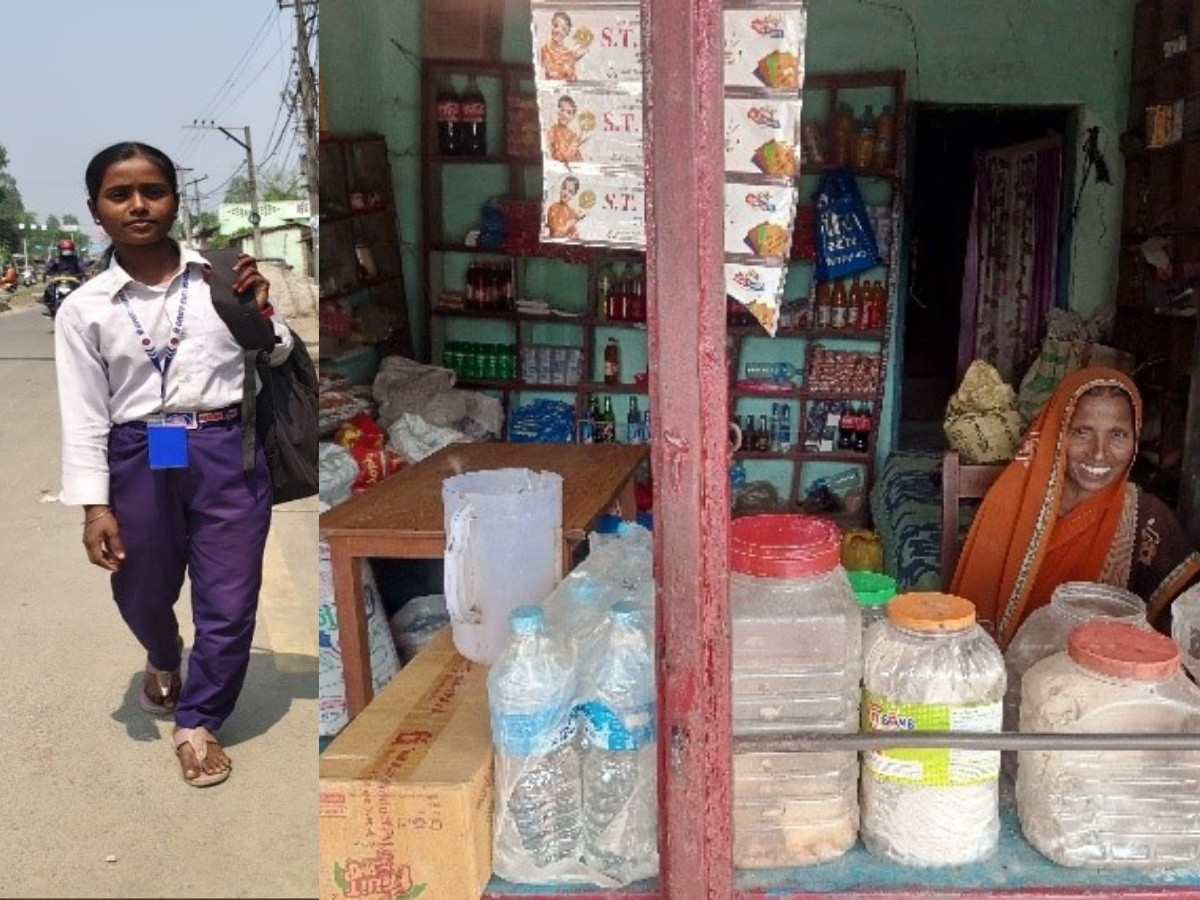
Namaskar! This is me Motiram Chaudhary. I am a farmer from Rangapur, Gujara Municipality. Farming is my main occupation and the primary source of livelihood for my family. Along with agriculture, I run a small grocery shop to support my household income. When I am free from farm work, I sit in my shop. My wife manages household chores and also does sewing work occasionally in her leisure time. My two sons are currently studying in school. This is how our family life has been going.
While, one day, while I was sitting outside in my yard, one of the sir from RDC Nepal visited our community. He asked me to call a few people from the neighborhood, saying that he wanted to have a short discussion with community members. I called a few nearby people without asking many questions because I was also willing to know as a whole in group. He then introduced himself as a staff member of RDC Nepal working under the BCRC project as JTA. He shared that they were planning to run a 16-week Climate Field School (CFS) in our area and were looking for 25 interested farmers to participate. We agreed to prepare a list of 25 farmers and submitted it to him the next day. Actually, we submitted more than 25 members but later some of the farmers withdrew due to poor interest.
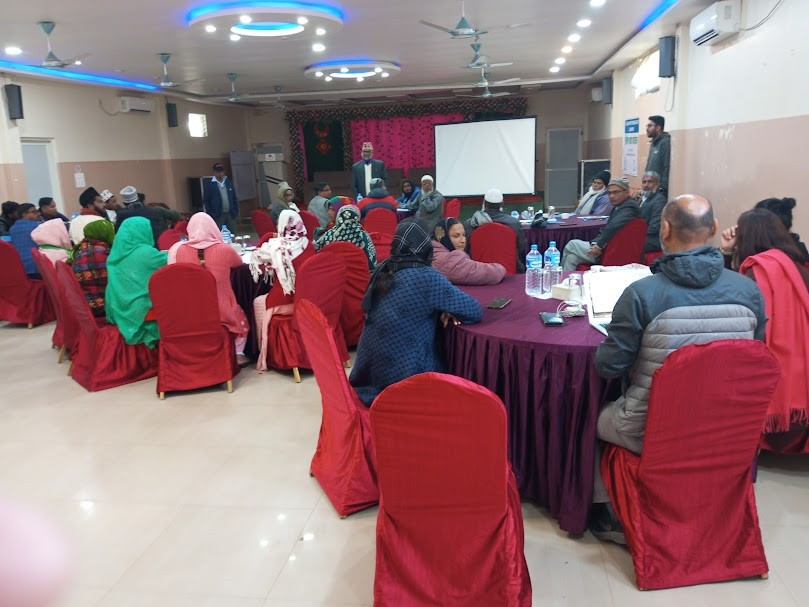
A few days later, we received a call asking all selected participants to gather for a meeting. On that day, staff from RDC Nepal, including Mr. Sachindra Yadav and Mr. Mahesh Yadav, visited our community. Mr. Mahesh Yadav introduced himself as the facilitator of the Climate Field School. During the first meeting, he explained the objectives and structure of the CFS. We learned that the school would run for 16 weeks and focus on climate-resilient agricultural practices, mainly through paddy cultivation. I was also selected as Chairperson of the CFS and the CFS was named as Pragatishil Climate Field School.

At first, many of us felt that we had already been farming rice for years and questioned what new things we could learn. We also said that this paddy farming we are doing since very long and we are getting good production. However, the facilitator explained how climate change is affecting agriculture and why climate-smart and climate-resilient farming practices are now essential. He also shared that the production will be even more and also help to reduce the chemical burden in field. After this discussion, we agreed to participate with interest.
We started attending CFS sessions twice a month. Each session introduced new topics followed by practical field-based learning. One of the most important lessons we learned was that not all insects are harmful. Some are beneficial or “friendly” insects. Through practical demonstrations, we learned to differentiate between pest insects and beneficial insects. For example, we observed by planting some paddy plants inside net where grasshoppers were kept and saw how grasshoppers damaged rice plants and then how spiders helped control those pests naturally when spiders were kept in same net where spiders kill the grasshopper without harming the plants. This practical learning completely changed our understanding of insects in farming.
Another important lesson was related to fertilizer use. We observed that rice fields with heavy urea application initially looked greener and healthier, but later the plants became weak and lodged down during heavy rain or flooding or even with wind pressure. On the other hand, rice grown using local seeds with organic manure, jholmal, mustard cake, and minimal chemical inputs showed better resilience and sustainability. This helped us realize the importance of local seeds and organic practices in climate-resilient farming.

During the CFS session, we also learned how to prepare and use Jholmal-1, Jholmal-2, and Jholmal-3 through hands-on practice. Jholmal-1 is used for soil preparation and improving soil nutrients, Jholmal-2 is effective for disease management like fungus, bacterial infestation, and Jholmal-3 is used for pest control. These organic solutions were completely new to us, and learning their preparation and application was one of the most valuable experiences of the CFS. Without this Climate Field School, we would never have known about these practices which was also a organic practice. We also learned pest management techniques during the crop’s milking stage. When stem borer infestation was observed, the facilitator taught us how to control it using cow urine soaked in jute sacks. This traditional yet effective method worked well in the field.
In addition, we learned crop cutting methods to estimate production of the paddy, seed treatment techniques using eggs and salt to ensure quality seed selection, and organic manure testing using hydrogen peroxide. We practiced improved rice planting methods such as the System of Rice Intensification (SRI) and compared them with traditional methods. We were surprised to see even planting just a single paddy sapling was enough and magic was seen through tiller per tiller. Through these practices, we observed that local varieties like Lalka Basmati were more disease-resistant and climate-resilient.
Through this Climate Field School, we gained valuable knowledge and practical skills that are directly useful in our daily farming lives. The learning was practical, interesting, and highly beneficial. On behalf of all participants, I would like to sincerely thank RDC Nepal and Oxfam for implementing such a meaningful Climate Field School. We are now committed to applying the knowledge and skills we gained and moving forward with climate-smart and climate-resilient agriculture.

Quotes from CFS participants:
“ Before this CFS, I was unknown that there are even beneficial insect for the crops and how it served as a friend of farmer. But, after being involved in this Climate Change Field School, I became clear about the Shatru Jib and Mitra Jib which was practically demonstrated during the session. I express my thanks to Mahesh sir, RDC and Oxfam for the BCRC project to be implemented in our community”